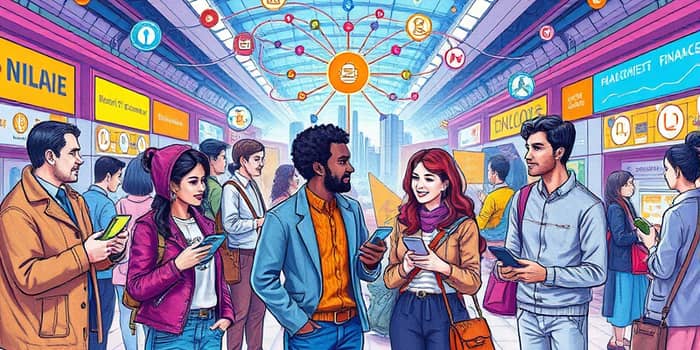
In a world where traditional banks often struggle to meet the evolving needs of businesses and individuals, alternative lending platforms have emerged as catalysts for economic growth and financial inclusion. This transformative landscape not only offers faster access to capital but also empowers underserved communities and innovative ventures.
Over the past decade, peer-to-peer lending, crowdfunding, and revenue-based financing have shattered the confines of conventional banking. In 2024, the global alternative lending market was valued at USD 201.64 billion and is projected to almost double by 2032. This explosive growth is driven by digital-first platforms harnessing advanced technologies to streamline lending processes.
Artificial intelligence and big data analytics power rapid credit assessments, enabling platforms to deliver tailored loan approvals within hours rather than weeks. This shift has been especially pronounced in regions where traditional banks impose stringent lending criteria, leaving small businesses and individual borrowers underbanked.
In North America, peer-to-peer lending remains the dominant segment, while Asia-Pacific’s crowdfunding ecosystem is expanding at a remarkable pace. Europe and the United Kingdom, with their robust fintech hubs, are witnessing a surge in digital lending solutions that thrive under favorable regulatory frameworks.
Whether you are an entrepreneur seeking seed capital, an e-commerce merchant aiming to scale inventory, or an individual looking to consolidate debt, alternative lending offers versatile financial tools. The sector’s flexibility accommodates a wide array of borrower profiles:
By partnering with non-bank institutions or leveraging embedded finance within e-commerce ecosystems, you can secure funds that align with cash flow cycles. For example, revenue-based financing adapts repayments to monthly sales, offering a lifeline to businesses with fluctuating incomes.
Moreover, students and young professionals increasingly turn to alternative platforms for education loans and personal credit, benefiting from transparent fee structures and user-friendly digital interfaces. As fintech continues to democratize access, more borrowers gain the confidence to pursue ambitious goals.
To make the most of this dynamic financial landscape, consider these actionable steps:
Building relationships with alternative lenders can also open doors to future credit lines as your financial track record strengthens. Keep lenders informed of your growth milestones and leverage positive payment history to negotiate better terms on successive loans.
For SMEs, partnering with fintech firms backed by institutional capital brings additional benefits. Many platforms securitize loans and recycle capital rapidly, ensuring steady funding availability. This structure fosters a reliable financing environment, even during economic cycles when banks tighten credit.
The alternative lending sector is poised for continued expansion. Analysts project that market size will climb from USD 203.92 billion in 2025 to USD 447.94 billion by 2032 at a CAGR of 11.9%. A more aggressive forecast suggests growth to USD 1.68 trillion by 2035, driven by innovation in lending models and deeper market penetration.
Key trends shaping this trajectory include:
To crystallize these projections, consider the following summary:
Regional dynamics will also evolve. North America will continue to lead, Asia-Pacific will drive volume growth through crowdfunding and SME lending, and Europe will harness regulatory support to expand AI-powered credit assessments.
Alternative lending represents a profound shift in how capital flows within the global economy. By embracing technology-driven financing, borrowers gain agility, access, and transparency that traditional banks often cannot match. Whether you are an innovator launching a startup, a retailer optimizing inventory, or a student investing in your future, these platforms offer pragmatic solutions to fund your aspirations.
The power to reshape your financial path lies within reach. Start by exploring diverse lending options, cultivating strong credit practices, and aligning capital structures with your operational realities. In doing so, you will not only secure the funds you need but also contribute to a more inclusive, resilient, and dynamic economic ecosystem.
References