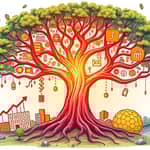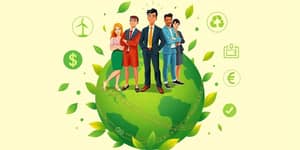
In today’s rapidly evolving business landscape, success is measured by more than just financial returns. Organizations are reimagining their role in society, seeking harmony between economic performance, social responsibility, and environmental stewardship.
By embracing the triple bottom line framework, companies can unlock new opportunities, build resilient operations, and foster trust with stakeholders around the globe.
The triple bottom line concept emerged in 1994, introduced by British consultant John Elkington. He argued that traditional accounting omits critical social and ecological costs, shifting the burden onto communities and ecosystems.
Elkington’s model rests on three pillars—People, Planet, and Profit—illustrating how organizations can thrive by balancing human welfare, environmental health, and financial viability.
At its core, the framework offers a solid foundation for sustainable decision-making, encouraging leaders to factor in long-term societal and ecological impacts.
Investors increasingly recognize that companies prioritizing environmental and social goals alongside profit demonstrate enhance long-term resilience and growth. By integrating nonfinancial metrics, they identify firms poised to weather regulatory shifts, resource constraints, and shifting consumer preferences.
Through this holistic lens, investors can uncover lasting positive impact for future generations, while also securing competitive financial returns.
Leading organizations across industries showcase how the triple bottom line transforms business strategies. From renewable energy startups to global consumer goods giants, these examples illustrate practical pathways to integrate social and environmental goals.
These case studies reveal how social initiatives and environmental investments can drive robust economic outcomes, forming an interconnected system of impacts that fuels sustained success.
Effective measurement is vital to ensuring accountability and continuous improvement across the triple bottom line dimensions. Organizations deploy a variety of metrics to capture progress and inform strategy.
Reporting takes place via sustainability reports, Global Reporting Initiative (GRI) frameworks, and integration into annual financial statements. These disclosures reassure stakeholders that the company values both ethical practices and financial health with key performance metrics and reporting frameworks.
Despite its benefits, adopting the triple bottom line can be challenging. Data collection may be complex, initial investments can be high, and traditional mindsets often prioritize short-term profits.
Overcoming these obstacles requires leadership commitment, cross-functional collaboration, and ongoing stakeholder engagement. By fostering a culture of innovation and transparency, companies can convert challenges into catalysts for meaningful change.
Ultimately, the path forward hinges on systems thinking—recognizing that every decision echoes across financial, social, and environmental dimensions. Organizations that internalize this philosophy are positioned to lead in a rapidly evolving global market.
Embracing the triple bottom line reframes profit as one piece of a larger puzzle. When corporations weave together people, planet, and profit, they unlock new realms of innovation, loyalty, and resilience.
By championing social and environmental considerations alongside profit, businesses not only thrive economically but also contribute to a healthier planet and more equitable societies. This holistic approach represents the next frontier in finance, inspiring a future where prosperity is measured by the well-being of all.
References