Money often feels like a relentless tide of numbers and fluctuating rates. But beyond the reports and charts, every dollar holds the potential to shape lives, communities, and the very future of our planet. When we understand the forces driving the dollar’s rise and fall, we gain the power to create impact far beyond our own wallets.
Today’s currency landscape is more than a financial ledger—it’s a story of collective choices, global connections, and the empowering individual choices every day that decide whether our economy fosters growth, equity, and sustainability. By decoding the dollar, we see how our everyday financial decisions can ripple outward and become catalysts for positive change.
From 2010 through 2024, the U.S. dollar enjoyed a remarkable bull cycle, appreciating roughly 40%. But in early 2025, that trend reversed dramatically. Between January and June 2025, the dollar index plunged about 10.7%, marking its biggest loss since 1973. By September, the depreciation reached 11% versus major currencies, its steepest half-year drop in over five decades.
The downturn reflects deeper currents: shifting interest rate expectations, elevated tariffs, and mounting fiscal uncertainty. As global investors recalibrate their portfolios, the true lesson becomes clear: currency trends mirror our collective direction—toward isolation or interdependence, short-term gain or long-term resilience.
Multiple factors have converged to weaken the dollar. Tariff hikes launched in April 2025 raised barriers not seen in a century, dampening U.S. import demand and shaking global confidence.
Interest rates, once at 5.25%–5.5%, are slated to fall to as low as 2.5% by late 2026. With growth forecasts sliding toward 1%–1.5%, investors anticipate easier money and seek higher yields abroad. Meanwhile, headlines about central bank leadership and a record $4.1 trillion fiscal plan stoke policy uncertainty, triggering sudden swings in currency markets.
Global capital flows reveal the story: foreign purchases of U.S. equities have waned, while emerging-market investments gain traction. This diversification underscores how global financial landscape remains interconnected and why our decisions matter beyond national borders.
The dollar’s journey touches each of us differently. American travelers now face steeper costs overseas, as their dollars buy fewer euros or yen. Yet exporters find U.S. goods more competitively priced abroad, boosting firms like Apple and Microsoft. Commodity producers—oil, metals, agriculture—benefit from higher global prices as the dollar falls, while fixed-income investors may see real yields eroded by rising import costs.
Foreign investors also recalibrate. U.S. assets lose their sheen when the dollar weakens, and many governments explore direct trade in local currencies. Despite these shifts, the dollar’s role as a safe haven endures, underpinned by deep markets and centuries of trust.
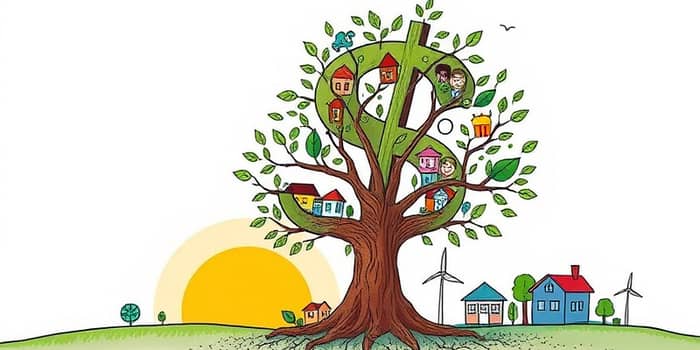
Amid volatility, your financial choices gain even greater significance. Every deposit, investment, and purchase sends a message. When we align our money with values—supporting renewable energy, local enterprise, and ethical business practices—we activate the financial decisions can shape futures of families and ecosystems around the world.
Begin with a financial audit—map your accounts, assets, and spending. Identify one or two areas to shift toward more purpose-driven options. Many brokerage platforms now offer filters for green funds or community investments. Simple monthly investments, even as low as $50, can build lasting momentum.
Set clear goals: whether it’s reducing your carbon footprint, fostering economic equity, or supporting local agriculture, name your impact objective. Track progress, adjust allocations quarterly, and celebrate milestones as you see your dollars grow in value and influence.
The dollar’s next chapters will reflect our collective choices—whether we default to isolationist impulses or embrace the power of shared progress. By harnessing the your financial power to catalyze sustainable and inclusive growth, we forge a path toward an economy that serves people and planet alike.
Every transaction is a vote for the world we want. When we decode the dollar’s lessons and channel our resources wisely, we build bridges of opportunity—across borders, generations, and communities. Let your money be more than currency; let it be a beacon of hope and a catalyst for positive transformation.
References