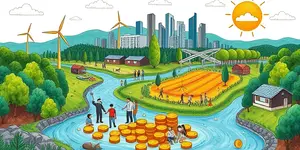
In a world grappling with widening inequalities, escalating climate risks, and urgent humanitarian crises, the quest for innovative funding mechanisms has never been more critical. With the Sustainable Development Goals falling behind schedule and global needs soaring, stakeholders must unite to bridge a multitrillion-dollar financing gap and fuel the solutions that will reshape our future.
According to recent analyses, the shortfall in development financing could reach USD 6.4 trillion by 2030. Only 17% of the SDGs are currently on track, signaling a dire necessity for new approaches to investment. Without bold action, communities worldwide risk being left behind as social, economic, and environmental pressures intensify.
This funding gap extends beyond mere numbers. It translates into underfunded schools, crumbling healthcare systems, and ecosystems pushed to the brink. To combat these challenges, public and private actors must heed this call to action and mobilize resources in transformative ways.
Climate technology has surged into the spotlight, ranking among the top three categories for venture funding in 2025. Global investors are directing capital toward deep-tech climate solutions that promise scalable, profitable, and planet-positive outcomes. The ratio of renewables investment to fossil-based power now stands at 10 to 1, underscoring a decisive shift in priorities.
Key areas attracting attention include:
These fields offer not just ecological benefits, but also compelling returns. Companies with strong environmental, social, and governance performance delivered nearly 13% annual returns in recent years, outperforming traditional counterparts.
Across the globe, specialized programs are empowering entrepreneurs and researchers to turn bold ideas into real-world impact. From seed grants to conditional awards, these initiatives provide essential capital and mentorship.
By participating in these programs, innovators gain more than money—they access networks, technical guidance, and visibility essential for scaling.
Governments are pivotal in shaping markets through incentives, regulations, and public funding. In the United States alone, the EPA channels over USD 4 billion in green grants, complemented by tax credits that lower the cost barrier for clean technologies.
Policy shifts in major economies have influenced a forecasted doubling of global renewable capacity by 2030. By crafting stable, long-term frameworks, governments can reduce investment risk and spur private capital deployment.
No single actor can address the complexities of climate change, poverty, and resource scarcity alone. Cross-sector collaboration harnesses diverse strengths—public oversight, private capital, and civil society creativity—to accelerate progress.
Initiatives like the Global Lighthouse Network showcase the power of digital technologies and peer learning in driving productivity and sustainability across industries. Meanwhile, programs such as the Water Futures Community bind private and public efforts through joint roadmaps and investment commitments.
Ultimately, addressing the magnitudes of global challenges demands both visionary leaps and incremental steps. By leveraging sustainable development goals as a compass, stakeholders can craft pathways that blend economic opportunity with environmental stewardship.
As we navigate the coming decade, the convergence of innovative finance, cutting-edge technology, robust policy frameworks, and collaborative action can bridge the funding gap and unlock resilient, inclusive growth. Every grant awarded, policy enacted, and partnership formed becomes a vital building block toward a future where shared prosperity and planetary health are inseparable.
References