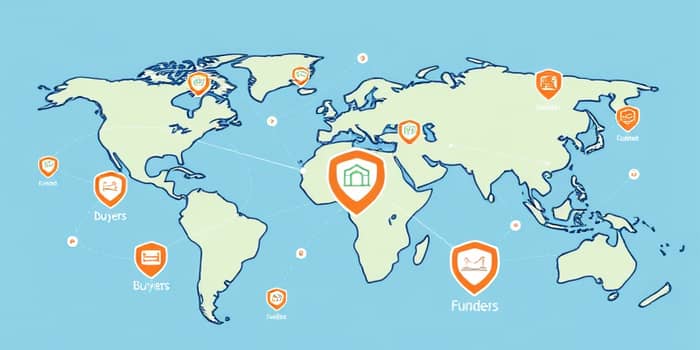
In today's fast-paced global market, Supply Chain Finance (SCF) has revolutionized how businesses manage cash flow and foster supplier relationships.
By enabling early payments to suppliers, companies can optimize working capital and enhance operational efficiency across complex networks.
However, this financial ecosystem demands rigorous vetting processes to mitigate risks and ensure compliance with evolving regulations.
As digital transformation accelerates, understanding the intricacies of supply chain compliance is no longer optional—it's a strategic imperative for sustainable growth.
This article guides you through the evolution, key vetting steps, technological enablers, and best practices to build a resilient financial ecosystem.
The landscape of supply chain finance has shifted dramatically from traditional bank portals to integrated digital solutions.
Embedded finance in ERP systems and e-commerce platforms now unlocks new revenue streams through strategic partnerships.
This evolution supports global scalability, allowing businesses to onboard thousands of suppliers digitally with multi-jurisdiction compliance.
Key advancements include:
This shift not only reduces friction but also aligns financial interests across the supply chain, fostering a collaborative environment.
Effective vetting is the backbone of a secure financial ecosystem, involving multiple stages to screen and validate participants.
Pre-screening assesses critical factors to filter out high-risk deals early in the process.
It focuses on jurisdictions, asset types, and performance history, with less than 10% of deals advancing to the next stage.
Key pre-screening criteria include:
The deposit stage signals commitment and aligns interests, deterring bad actors from entering the ecosystem.
In-depth due diligence follows, spanning 3-6 weeks, and involves comprehensive checks to uncover hidden risks.
This phase includes:
KYB and KYC core elements are integral, ensuring legal status verification and ownership chain transparency.
A risk-based approach with enhanced due diligence (EDD) is applied for high-risk entities, safeguarding against fraud.
Screening types, such as sanctions and PEP lists, automate detection of illicit activities like money laundering.
Technology plays a pivotal role in streamlining compliance and enhancing the efficiency of supply chain finance ecosystems.
Automated platforms provide real-time visibility and analytics, enabling proactive risk management and decision-making.
Below is a table summarizing key technological features and their benefits in ensuring compliance at scale.
These technologies empower businesses to navigate complex regulatory landscapes with confidence and agility.
By leveraging automation, companies can focus on strategic growth while minimizing compliance burdens.
Despite advancements, supply chain finance ecosystems face significant risks that require vigilant mitigation strategies.
Threats such as money laundering via shell companies can undermine financial integrity and disrupt operations.
Transaction laundering, where illicit merchants bypass screening, poses another challenge for global chains.
To counteract these risks, businesses must adopt a proactive approach with robust measures in place.
Key mitigation strategies include:
By prioritizing these practices, organizations can build resilient ecosystems that withstand disruptions and fraud attempts.
The benefits of a well-vetted supply chain finance ecosystem are both quantitative and qualitative, driving value for all participants.
Quantitatively, the selectivity rate ensures quality, with less than 10% of deals progressing to advanced stages.
The vetting timeline of 3-6 weeks balances thoroughness with efficiency, optimizing resource allocation.
For buyers, extended payment terms and optimized capital reduce operational friction and enhance liquidity.
Suppliers gain access to early payments at low fees, leveraging the buyer's credit for better financial stability.
Ecosystem-wide benefits include revenue alignment, risk distribution, and customer-centric integration at scale.
Key metrics and advantages are:
Embracing these benefits requires commitment to continuous improvement and adaptation in a dynamic market environment.
By focusing on metrics like deal progression rates and vetting efficiency, businesses can measure success and refine their approaches.
Ultimately, a robust financial ecosystem fosters innovation, trust, and sustainable growth across the supply chain.
References