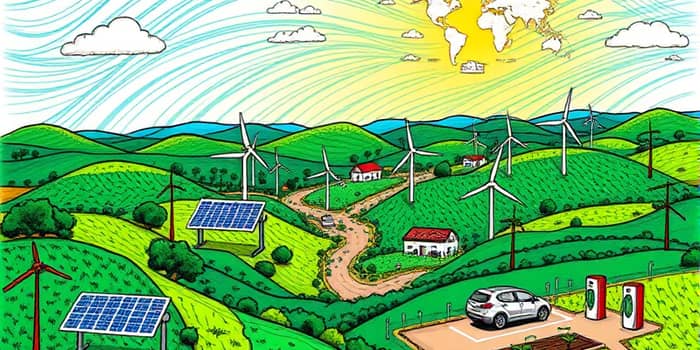
Across the globe, a powerful transformation is underway as capital shifts from traditional industries to green technologies. Investors are awakening to the fact that sustainable initiatives are not merely moral choices but avenues to lasting profit and planetary well-being. The unprecedented growth of low-carbon solutions represents a momentous opportunity—one that demands vision, diligence, and action.
In this era of rapid change, those who understand the stakes and leverage emerging trends will reap both financial returns and meaningful impact. Let’s explore how you can be part of this historic wave.
The scale and urgency of the green transition cannot be overstated. Over the past decade, venture capital has poured into climate tech startups, and the market size doubling over the past five years underscores investor confidence. Production of key minerals like lithium, cobalt, copper, nickel, and rare earth elements is projected to increase by nearly 500% by 2050, driven by soaring demand for electric vehicles, renewable energy infrastructure, and battery storage.
Governments are matching private enthusiasm with policy support. The European Union’s multibillion-dollar climate stimulus, national green bonds, and regulatory mandates on carbon disclosure are rewriting the investment playbook. Whether you’re an institutional fund manager or an individual investor, the message is clear: the green economy is the growth frontier of our lifetime.
At the heart of this transformation lies a convergence of powerful forces. Technological breakthroughs, favorable regulations, and shifting consumer preferences create a perfect storm of opportunity. Key innovations are fueling scalability, cost reduction, and performance improvements across the ecosystem.
These tools are being deployed in concert: AI and analytics optimize solar farm outputs; blockchain ensures supply chain transparency for critical minerals; IoT sensors and smart grids enable real-time demand balancing. The result is a resilient, efficient, and low-carbon infrastructure.
Forward-thinking investors recognize that digital solutions are just as critical as physical assets. By partnering with startups and established firms, you can drive meaningful change at speed. For example, blockchain tracking of cobalt can prevent illicit trade and human rights abuses, while predictive analytics can forecast energy demand spikes, reducing waste.
Institutions are also embracing robust governance frameworks and oversight to safeguard investments. From enhanced due diligence on mineral sourcing to third-party certification of solar components, transparency is now a cornerstone of sustainable finance. This built-in accountability not only mitigates risk but also bolsters long-term returns.
The narrative has shifted decisively: sustainability is an economic imperative driving sustainable growth. Far from being a cost center, green innovation opens new markets, attracts top talent, and differentiates brands in a crowded landscape. Leading firms report that green products and services deliver higher margins and stronger customer loyalty.
Venture forecasts are staggering: investment in green-business startups and corporate innovation could reach $3.4 trillion by 2030 forecast, while ESG assets under management may balloon into the tens of trillions. The message from major banks and asset managers is unmistakable—companies that fail to adapt will struggle to survive.
Despite the tremendous upside, challenges remain. The rush for transition minerals brings corruption and bribery risks in regions with weak governance, potentially exposing investors to legal and reputational fallout. Strict adherence to anti-money laundering (AML) and anti-corruption regulations is non-negotiable, and proactive engagement with local stakeholders is essential.
Meanwhile, greenwashing concerns have reached a fever pitch. Investors and consumers alike must distinguish between genuine sustainability efforts and mere marketing posturing. Certification frameworks—such as B Corporation accreditation and UN-backed Principles for Responsible Investment signatories—serve as critical guardrails for authenticity and impact.
Seizing the green gold rush requires both strategic insight and practical action. Here are key steps to ensure your investments deliver real returns, financially and environmentally:
By integrating these practices, you build a resilient portfolio that stands up to rigorous scrutiny and adapts to evolving regulatory landscapes. You also become a proactive partner in shaping a cleaner, more equitable future.
The green gold rush is more than a transient trend—it is a global mission that will define generations to come. As an investor, you have the power to channel capital toward transformative solutions, from renewable energy megaprojects to grassroots climate tech innovations. Every dollar you allocate is a vote for a healthier planet.
Now is the moment to align profit with purpose. Embrace the opportunities, navigate the risks, and commit to rigorous standards of authenticity. Together, we can build a sustainable future that delivers on both financial promise and ecological stewardship. The green gold rush awaits—will you answer the call?
References