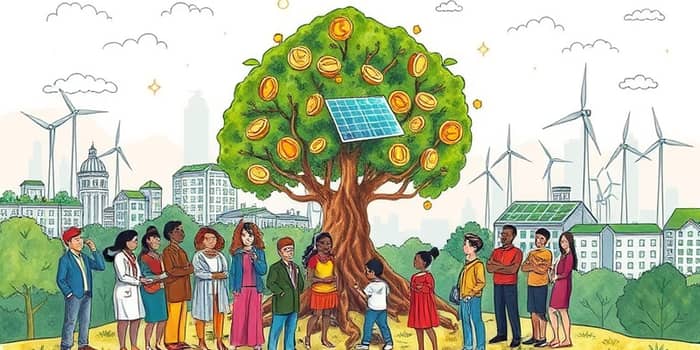
As the world confronts unprecedented environmental and social challenges, finance must evolve to meet the moment. Sustainable finance is no longer a niche—it is a global imperative reshaping markets and priorities. This article explores why directing capital toward people and planet is essential for our shared future.
With the global sustainable finance market surpassing $8.2 trillion in 2024, momentum is undeniable. This growth has not only redefined investment norms but also created new pathways for impact and innovation.
Over the last decade, investors have shifted focus from short-term gains to long-term value creation. Today’s portfolios increasingly reflect environmental, social, and governance criteria as core considerations, rather than afterthoughts.
Global sustainable finance market growth was driven by record issuance of green and social bonds, which reached a staggering $1.05 trillion in 2024. Such breakthroughs prove that capital flows can align with both profit and purpose.
Despite this surge, challenges remain. The UN estimates a $4 trillion annual gap in funding needed to achieve the Sustainable Development Goals by 2030. Without collective resolve, this shortfall threatens progress on climate action, poverty reduction, and infrastructure resilience.
To illustrate where capital is most urgently required, consider these annual financing needs:
Far from being a burden, this gap represents a vast opportunity. Investors stand to benefit from transformative nature-positive business opportunities that generate both robust financial returns and profound social impact.
Sectors poised for explosive growth include renewable energy infrastructure, sustainable agriculture, and green manufacturing. In many cases, regulatory incentives—such as the US Inflation Reduction Act and the EU Green Deal Industrial Plan—have catalyzed issuance and capital deployment.
Investors seeking stability amid volatility are turning to sustainable assets. Infrastructure projects, for example, offer stable and inflation-protected returns while fortifying communities against climate risks.
Meanwhile, sustainable bond frameworks and sustainability-linked loans encourage issuers to meet measurable targets, creating a feedback loop of progress and transparency.
With growth comes responsibility. The threat of greenwashing has spurred regulators worldwide to tighten standards and labeling requirements. Robust disclosures and third-party verification are becoming the norm, not the exception.
Key measures include stricter EU taxonomy rules and enhanced sustainability reporting mandates. Such policies strengthen integrity and transparency standards, ensuring that capital truly drives positive outcomes.
No single entity can bridge the financing gap alone. Governments, multilateral development banks, private institutions, and community organizations must unite around shared goals.
Major multilateral development banks have pledged to scale climate finance to $120 billion annually by 2030, with an ambitious $300 billion commitment by 2035. These collective efforts demonstrate how pooling resources can unlock transformative change.
Investors and stakeholders must embrace a mindset of continuous improvement and innovation. By integrating cutting-edge data analytics, AI-driven risk assessment, and scenario planning, financial institutions can optimize both impact and returns.
The journey ahead calls for bold leadership and unwavering commitment. When capital aligns with purpose, every dollar invested becomes a force for regeneration, resilience, and renewal.
Today, you have the power to redirect capital towards a future rooted in sustainability and equity. Whether you are an institutional investor, entrepreneur, or concerned citizen, your choices matter.
By championing sustainable finance, you help build a world where economic growth and environmental stewardship go hand in hand. Let us seize this moment to create lasting impact—because the future depends on the decisions we make today.
References